
The Modern Body Problem
Why Our Bodies Struggle in the World We Built

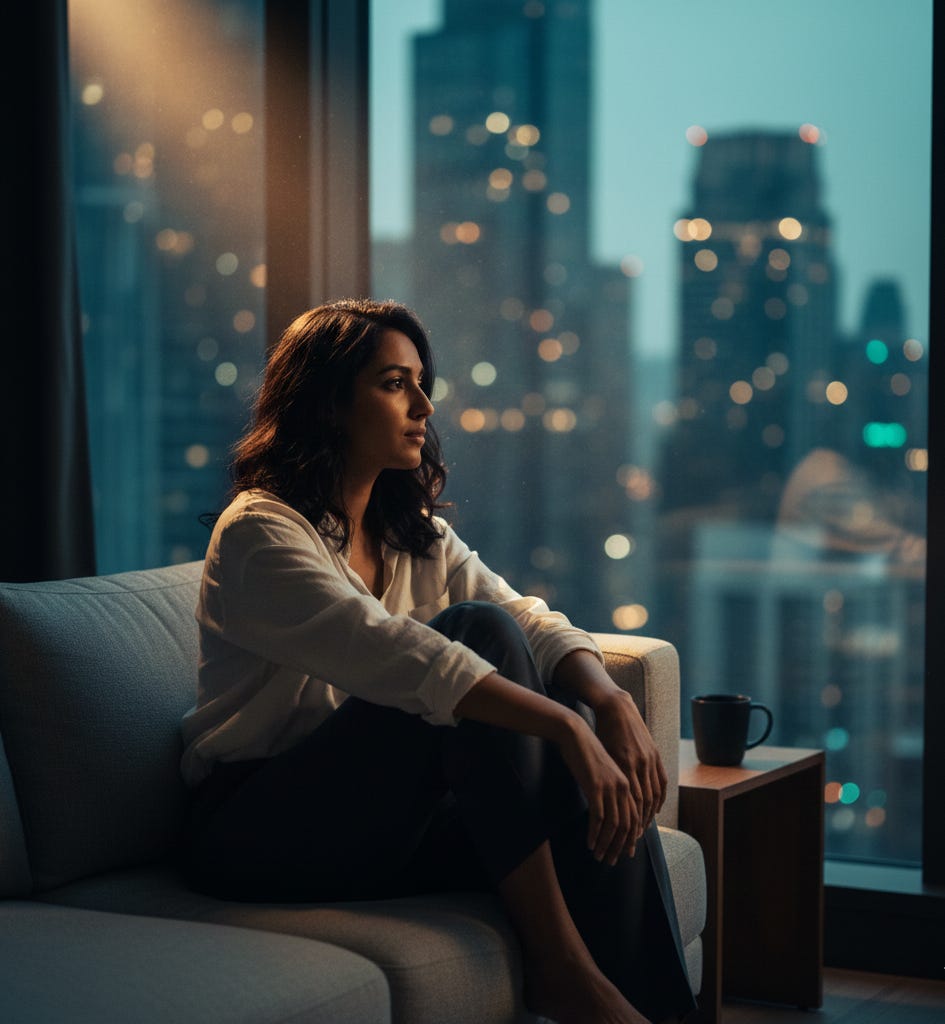
Sometimes I realize I’ve been sitting for hours without moving, barely aware of my own body.
My shoulders slowly creep upward. My jaw tightens without me noticing. My breathing gets shallow and quiet. My legs feel distant, like they belong to someone else. My eyes stay locked on a glowing screen while the rest of me slowly disappears from attention.
Nothing hurts. Nothing feels urgent.
But something feels wrong in a way that’s hard to explain.
It’s not pain. It’s not exhaustion. It’s a quiet disconnection — like living slightly outside your own body.
This isn’t a personal failure. It’s something almost all of us are living inside now. Our bodies were shaped over thousands of years to move, breathe deeply, feel sunlight, carry weight, change positions, and recover through natural rhythms. Then, in just a few decades, we built a world that asks the body to stay still, stay indoors, stay stimulated, and stay alert for most of the day.
The nervous system hasn’t caught up.
We’re asking ancient biology to operate inside a very new environment.
That gap creates what I think of as the modern body problem.
It shows up subtly at first. Energy feels inconsistent. Sleep doesn’t feel fully restorative. Small aches appear without injury. Focus fades faster than it used to. The body feels stiff even though nothing heavy was done. Mood shifts without obvious cause.
Most people treat these as separate problems. A bad chair. Bad posture. Bad sleep. Not enough stretching. Not enough motivation.
But underneath all of it is something simpler: the body isn’t getting the signals it needs to stay regulated.
Movement used to be built into daily life. Walking, carrying, changing positions, breathing naturally, spending time outdoors. Those signals kept joints nourished, circulation flowing, hormones balanced, and the nervous system grounded.
Now movement has become optional and compressed into small windows. We sit for long stretches. We breathe shallowly without noticing. Screens dominate our visual field from morning until night. Light exposure is artificial and irregular. Meals happen around schedules instead of hunger and rhythm.
From the body’s perspective, this creates confusion. It doesn’t know when to fully wake up or when to truly wind down. Muscles stay slightly tense. Breathing stays slightly guarded. Attention stays scattered. Recovery becomes incomplete.
Not because we’re doing something wrong — but because the environment no longer matches the design.
I noticed this most when I stopped blaming isolated symptoms and started paying attention to how my whole system felt across the day. The heaviness in the afternoon wasn’t laziness. The stiffness wasn’t a flexibility problem. The fog wasn’t lack of intelligence. It was a body that hadn’t been moved, breathed, or exposed to real sensory input enough to stay sharp and calm.
What surprised me is how quickly the body responds when you start giving it better signals again. Not extreme workouts or complicated routines — just small consistent changes. Standing up more often. Walking outside daily. Letting the eyes see distance instead of only screens. Eating with more regularity. Slowing the nervous system in the evening instead of stimulating it until sleep.
These don’t feel impressive. But they restore communication inside the body. Joints feel more alive. Breathing deepens naturally. Sleep settles. Energy stabilizes. The mind feels quieter without effort.
It feels like the system remembering how it’s supposed to function.
The modern body problem isn’t about fixing yourself. It’s about rebuilding small pieces of a lifestyle that your biology still expects — even if your calendar doesn’t.
You don’t need to escape modern life. You just need to soften its edges.
A few more steps.
A few deeper breaths.
A little more daylight.
A little less constant stimulation.
A little more respect for rhythm.
The body doesn’t ask for perfection.
It asks for enough.
And when it gets enough, it starts working with you again instead of against you.